 Blog
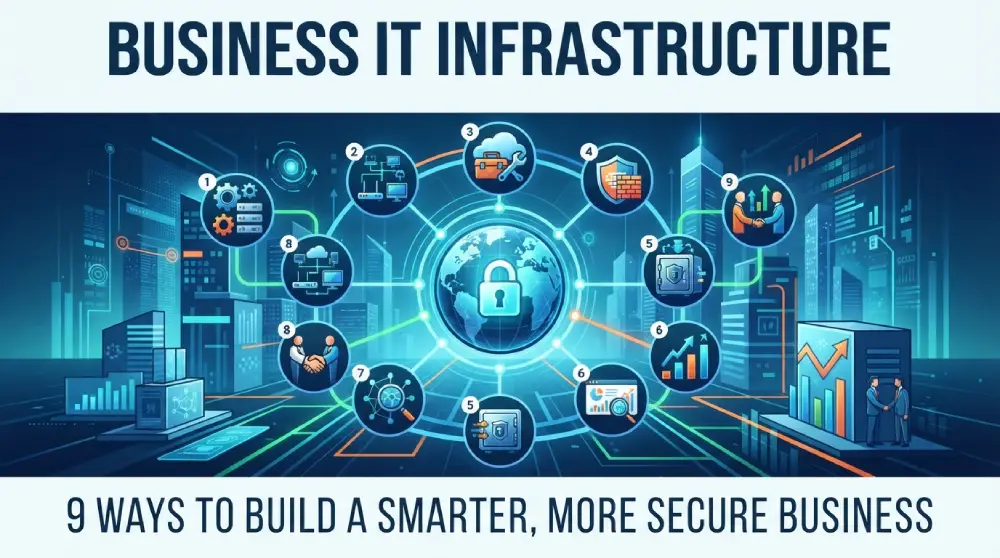
Business IT Infrastructure: 9 Ways to Build a Smarter, More Secure Business
Every business depends on technology to manage daily operations, communicate with customers, store information, and support employees. Without reliable systems, even simple tasks can become difficult. A well-planned Business IT Infrastructure helps organizations work efficiently, protect important data, and prepare for growth.
From secure networks to reliable backups, the right technology setup can improve productivity while reducing operational risks. Here are nine practical ways to build a smarter and more secure IT environment.
1. Invest in the Right IT Infrastructure Solutions
A strong IT environment starts with the right combination of hardware, software, networks, servers, and cloud services. IT Infrastructure Solutions should support the way your business operates rather than add unnecessary complexity.
Consider your current needs, employee requirements, security risks, and future plans before investing. Choosing compatible systems also makes maintenance and upgrades easier.

2. Build Reliable Business Networking
A dependable network allows employees, devices, and applications to communicate without unnecessary interruptions. Effective Business Networking includes secure routers, switches, firewalls, wireless access points, and reliable internet connectivity.
Businesses should also separate guest Wi-Fi from internal networks and restrict access to authorized devices. If you are searching for business networking near me, compare providers based on network design, installation experience, security services, and ongoing support.
3. Use Professional IT Infrastructure Services
Technology requires regular maintenance to remain reliable and secure. IT Infrastructure Services can include network setup, server management, cloud migration, cybersecurity, troubleshooting, and system upgrades.
Working with experienced IT professionals can help businesses identify weaknesses before they become major problems. Outsourced support may also be useful for organizations without an in-house IT department.
4. Strengthen Your Enterprise IT Infrastructure Security
As businesses grow, they often manage more devices, applications, users, and sensitive information. A secure Enterprise IT Infrastructure needs strong access controls and consistent security practices.
Important measures include multi-factor authentication, endpoint protection, firewalls, software updates, and restricted administrator permissions. Employees should also receive basic security training to recognize phishing attempts and suspicious activity.
5. Make Data Backup a Priority
Losing business data can disrupt operations and create financial problems. Regular Data Backup helps protect important documents, customer records, financial information, and system configurations.
Automate backups where possible, keep copies separate from your main network, and test restoration procedures regularly. A backup is only useful if your business can recover the information when needed.
6. Improve IT Infrastructure Management
Effective IT Infrastructure Management involves monitoring, maintaining, and updating the systems your business depends on. This includes tracking hardware, managing software licenses, monitoring network performance, and addressing technical issues.
Regular reviews help identify outdated equipment, unused applications, and security gaps. A clear maintenance schedule also reduces unexpected downtime.
7. Choose Practical IT Management Tools
The right IT Management Tools make it easier to oversee devices, users, networks, and applications. Depending on business needs, these may include network monitoring platforms, endpoint management software, help desk systems, and backup management tools.
Choose tools that work with your existing systems and provide useful reporting. Avoid investing in software with features your team will not actually use.
8. Plan for a Scalable IT Infrastructure
Technology that works for a small team may struggle when the business expands. A Scalable IT Infrastructure allows organizations to add employees, devices, storage, and applications without rebuilding everything from scratch.
Cloud services, flexible networking, centralized user management, and expandable storage can support future growth. Review capacity regularly so your infrastructure keeps pace with changing business requirements.

9. Work With an IT Partner That Understands Your Business
Managing every technology requirement internally can be difficult, especially when your team lacks specialized IT experience. A dependable IT partner can help with infrastructure planning, security improvements, troubleshooting, and ongoing maintenance.
Before choosing a provider, review its service offerings, response times, experience, support arrangements, and pricing. The right partner should understand your business goals and recommend solutions that fit your actual needs.
Conclusion
A reliable Business IT Infrastructure supports productivity, protects valuable information, and gives businesses room to grow. By improving networking, strengthening security, maintaining backups, and using appropriate management tools, organizations can build a more dependable technology environment.
Frequently Asked Questions
What is Business IT Infrastructure?
Business IT Infrastructure includes the hardware, software, networks, servers, cloud platforms, and services a company uses to operate and manage information.
What are common IT Infrastructure Solutions?
Common solutions include network systems, cloud hosting, cybersecurity tools, data backup, server management, and business communication platforms.
Why is Business Networking important?
Business Networking connects employees, devices, and applications. A reliable network supports communication, file sharing, internet access, and daily operations.
What do IT Infrastructure Services include?
They may include network installation, cloud migration, server maintenance, cybersecurity, technical support, and infrastructure monitoring.
How often should businesses back up their data?
Backup frequency depends on how often important information changes. Critical business data may require daily or continuous backups, along with regular recovery testing.
How can a business make its IT infrastructure more secure?
Use multi-factor authentication, strong access controls, updated software, firewalls, endpoint protection, employee training, and secure backups.
When should a business upgrade its IT infrastructure?
Consider an upgrade when systems become unreliable, security updates are no longer available, performance slows, or existing technology cannot support business growth.